Start With The Contamination
Blocked filters, water in the fuel or repeated burner trouble can point towards a tank problem, but symptoms alone do not establish the cause. The enquiry should bring together inspection findings, fuel history and the equipment affected. Cleaning is most useful when its purpose is clear.
A physical tank clean removes deposited material from internal surfaces and the floor. Fuel polishing treats the liquid passing through a filtration system. If settled sludge remains behind, circulating fuel can carry contamination back into service after apparently successful treatment.
The tank itself also needs to be worth retaining. Serious corrosion, damaged fittings or a suspected leak may change the project from maintenance to replacement. Cleaning can reveal condition, but it does not restore lost wall thickness or repair structural damage.
Choose A Cleaning Objective
| Objective | What To Discuss |
|---|---|
| Return an existing fuel tank to use | Deposits, condition, recoverable fuel and recommissioning checks. |
| Change the stored product | Both previous and proposed contents, compatibility and the cleanliness requirement. |
| Prepare for removal or inspection | The next task, preparation standard and any atmospheric evidence required. |
A change of product needs more than a tidy-looking tank. Send the product information and the receiving equipment requirements, so suitability can be reviewed. Do not assume that a tank previously holding one fuel is automatically suitable for another after washing.
External Cleaning And Internal Access
The openings, internal baffles and shape of the tank influence which surfaces equipment can reach. Cleaning through suitable access points may use suction and controlled flushing. Where deposits cannot be removed this way, internal entry needs a separate assessment.
HSE guidance on the Confined Spaces Regulations 1997 starts with avoiding entry where the work can reasonably be done from outside. Where entry is necessary, a safe system and emergency arrangements are needed. The method must be selected before anyone enters the tank.
This is why photographs of inspection covers are helpful but not an invitation to open them. Send existing drawings or maintenance records where available. Leave covers, isolation and access preparation to the competent people appointed to the work.
Protect Usable Fuel During The Clean
Cleaning normally takes the tank out of service while its contents are removed. Sampling can help distinguish recoverable fuel from water and heavily contaminated material. The transfer plan needs suitable temporary holding capacity and a clear way to keep separate liquid streams apart.
Recovered fuel may be filtered before return if its condition allows reuse. Fresh fuel may be needed where the original stock is unsuitable. Agree who supplies that fuel, the required quantity and when it can enter the cleaned tank.
For a generator or heating system serving occupied premises, identify how the load is supported during the outage. A standby unit may be idle in normal use but still have a resilience role. The site should formally accept any period when its usual backup is unavailable.
Prepare The Site Information
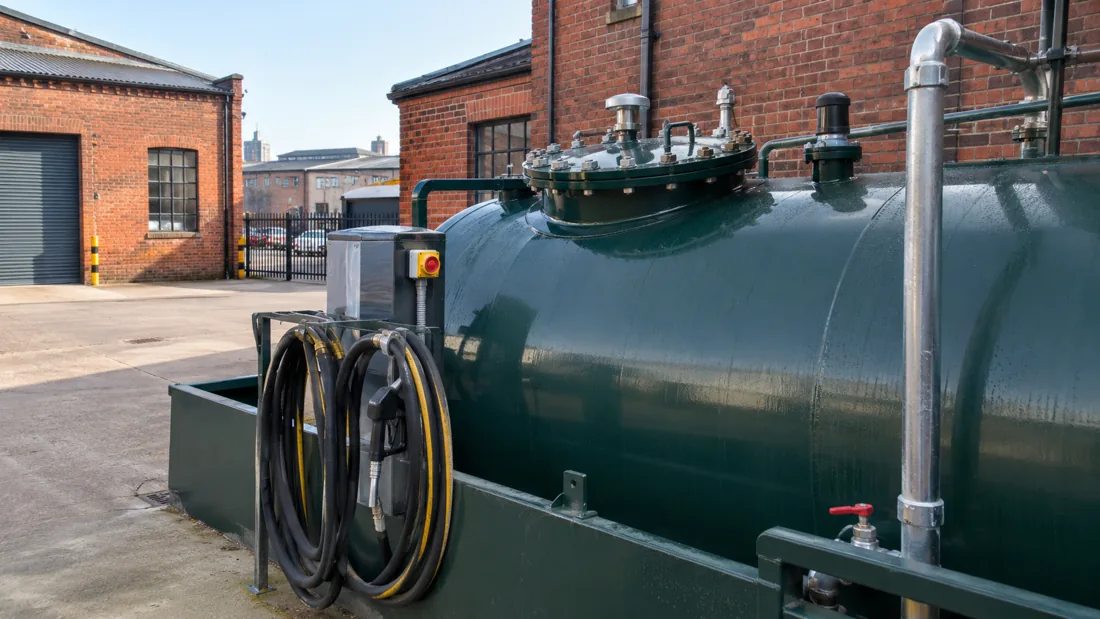
Send the tank capacity, construction, fuel type, approximate level and a photograph showing the whole installation. Include the nameplate if readable, the external bund, access covers and connections. Existing sample reports or photographs of dirty filters can help explain the problem.
The equipment position matters too. Show where a tanker or cleaning vehicle could stand, the hose route and any pedestrian crossings. Tell us about permit systems, restricted hours, ventilation limitations, security procedures and the availability of a site contact.
For several tanks, label each one clearly in your enquiry. Explain whether they share pipework and whether cleaning can be phased. A phased programme may preserve some storage capacity, but the isolation and transfer arrangements still need technical review.
Understand The Cleaning Allowance
The amount and nature of the residue influence the time, cleaning method and waste volume. Internal access arrangements, difficult openings, long hose routes and limited working windows can change the resources needed. A large tank with light deposits may be a different job from a small tank with stubborn sludge.
Ask whether fuel sampling, temporary storage, filtration of retained fuel and fresh fuel supply are included. If inspection follows the clean, define what inspection is intended and who performs it. A cleaning visit should not be mistaken for a structural examination or a guarantee of future fuel quality.
Before The Tank Goes Back Into Use
The handover should explain the work completed, notable internal condition findings and any limitations on the clean. Relevant waste documents should identify the material removed. Where gas-free certification is needed for a subsequent task, agree that requirement and its scope in advance.
Return-to-service responsibilities should cover closure of access points, reconnection where applicable and the functional checks appropriate to the fuel system. Keep the cleaning record alongside inspection and maintenance information. If water returns, investigate the entry route rather than simply repeating the same treatment.
Safety reference: HSE introduction to confined-space working.
Your Questions
How often should a commercial tank be cleaned?
Commercial tank cleaning intervals depend on inspection findings, contamination, fuel turnover and the importance of the equipment supplied. There is no useful single timetable for every installation. Recurring water or filter problems deserve investigation even after a recent clean, because an unresolved entry route can contaminate fresh fuel again.
Does cleaning include taking the tank away?
Tank cleaning does not include tank removal unless both tasks are included in the agreed scope. A clean may prepare a tank for continued use, internal inspection or later removal. Tell us the intended next step at enquiry stage, as it changes the preparation and completion evidence required.