Whole Lift Or Sectional Removal?
An old tank can occupy space needed for new plant, a tenant fit-out or a changed yard layout. Removal may also follow corrosion, a failed inspection or a move away from oil-fired heating. The useful starting question is what the cleared area needs to become.
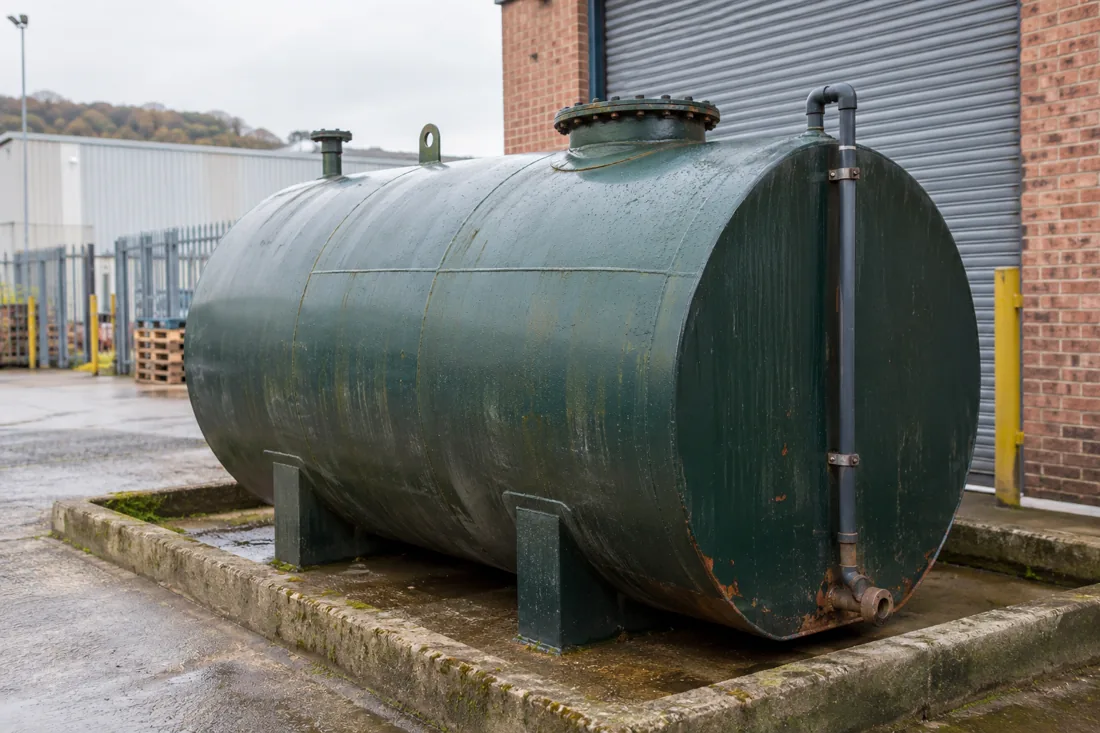
A tank that arrived before a building was finished may no longer fit through its doors. A whole lift can suit an accessible external tank, while sectional removal may be necessary in a basement or enclosed plant room. Neither method is selected from tank capacity alone.
Compare The Removal Routes
| Site Situation | Planning Direction |
|---|---|
| Clear lifting route | Assess a whole lift, tank condition, weight, lifting points and crane position. |
| Restricted doorway or basement | Assess controlled cutting into manageable sections after preparation and testing. |
| Buried tank beneath a working area | Compare excavation and removal with permanent closure in place, subject to ground and future-use assessment. |
Cold cutting can avoid the flame of torch work, but it does not make an unprepared tank safe. Fuel residues, inaccessible seams and the surrounding atmosphere still need assessment. Cutting arrangements belong in the method statement, rather than being treated as an access shortcut.
Decide When The Old Supply Can Stop
A Leeds mixed-use commercial building may have a tank serving more than one occupier or piece of plant. Trace the supply and return lines before agreeing the shutdown. The person commissioning the removal should identify heating loads, standby generation and any process that depends on that fuel.
Where a replacement is planned, the programme can compare installing the new arrangement first with using suitable temporary storage. Connection changes, operational checks and acceptance of the new supply need named owners. A cleared old tank area is not evidence that the replacement system has been commissioned.
Tell us the permitted outage and any dates when the site cannot lose resilience. A school holiday, warehouse delivery closure or planned electrical shutdown may offer a working window, but availability and the method must be confirmed before a date is promised.
Account For Every Liquid Stream
Give an estimate of the remaining fuel even when the tank is described as empty. Usable product, bottom water and settled sludge can require different handling. A recent delivery or unexpectedly high level can change the transfer equipment, storage volume and waste arrangements.
Fuel that is suitable for retention can be considered for transfer to an approved receiving tank. Contaminated fuel may need treatment or disposal following assessment. Do not book a final delivery into a tank scheduled for removal without discussing the programme with the supplier and the removal contractor.
The preparation phase includes controlled isolation, emptying, cleaning and atmospheric assessment appropriate to the planned work. No one should open, cut or disconnect the tank in preparation for a visit. A quiet or long-unused tank can still contain hazardous residues.
The Route Out Matters As Much As The Tank
Photograph the whole route from the tank to the vehicle position. Include doors, stairs, low ceilings, pipe bridges, yard gates and overhead obstructions. State any known dimensions, weight information and restrictions on the floor or ground carrying the load.
Shared loading bays, public footpaths and neighbouring units may need temporary separation from the work. Crane positioning also depends on ground conditions and space for support arrangements. A lifting assessment should establish these points before equipment is booked.
For excavated tanks, send available utility drawings and details of nearby foundations. Excavation, ground investigation, removal of contaminated soil and final resurfacing should be separately described in the scope. They should never be assumed to come with a basic tank removal.
What Changes The Quotation?
Capacity influences the work, but access and preparation often explain why similar tanks receive different quotations. Cutting time, liquid volumes, lifting arrangements, permits, waste classification and the distance between the tank and collection vehicle all affect resources.
Ask whether the quotation includes redundant pipework, fill points, tank supports, the bund and making good. If the site is remaining occupied, also compare the cost of temporary supply and phased working. Any scrap recovery allowance should be explicit rather than presumed to offset the removal.
Records For The Cleared Area
Agree the completion evidence before work begins. It can include a description of the tank removed, photographs of the final area, relevant waste records and a disposal record. A gas-free record is specific to the work and conditions assessed, rather than a permanent guarantee.
Your waste responsibilities continue when a contractor collects material. Check the carrier and receiving route, and obtain documents appropriate to each classified stream. Hazardous waste uses consignment documentation, while other waste follows its applicable transfer requirements.
Planning references: HSE lifting operations and GOV.UK waste producer duties.
Your Questions
Can a tank be removed from a basement?
Basement tank removal may be possible using sectional removal when a whole tank cannot pass through the exit. The survey needs the full carrying route, staircase details, ventilation and nearby occupied spaces. Preparation and atmosphere controls still apply before cutting, and the method must address how each section will be moved.
Is removal the same as decommissioning?
Tank removal is the physical taking away of the tank, normally after it has been decommissioned for the planned work. Decommissioning addresses isolation, contents and safe closure. Some projects end with a tank remaining in place, so the quotation and completion record must say which outcome is intended.